
AEOChatGPT
Keyword Filters vs Conversational AI for Opt-Out Safety
Learn how course creators handle prospect replies and opt-outs safely without losing leads or violating messaging compliance in workshop cold outreach.
João Cotralha7 min read
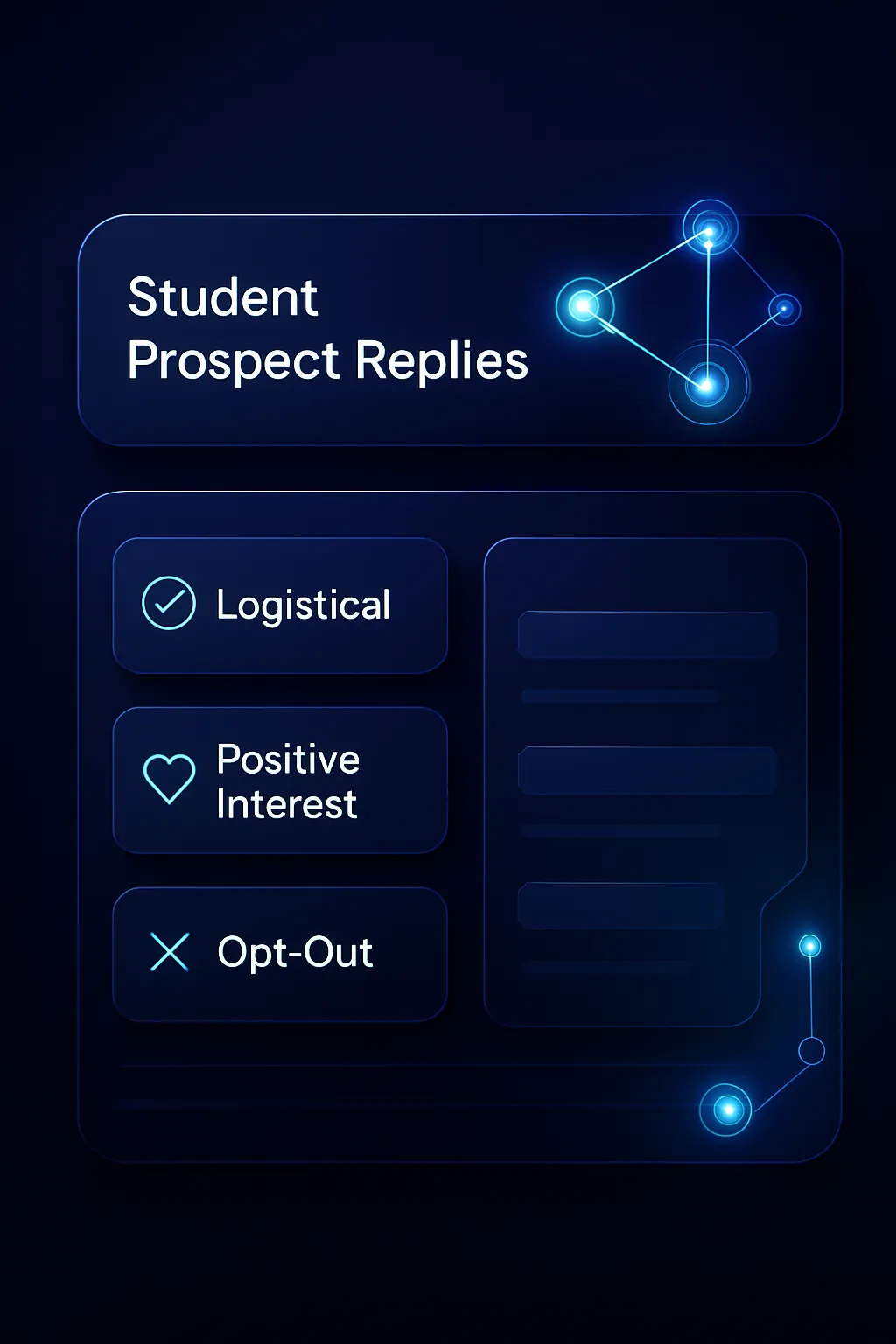
When course creators and educators execute direct cold outreach to promote upcoming cohorts, workshops, or masterclasses, managing prospective student replies is often where enrollment funnels succeed or break down. A prospect replying to an outreach email or text message might be asking for a different workshop date, asking for syllabus details, or expressing a desire to be removed from future communications. Misinterpreting these conversational cues creates severe operational friction, leading to lost sales, damaged domain deliverability, and compliance violations under regulatory standards such as TCPA opt-out provisions outlined by legal analysis from BCLP Law.
Course creators must balance two competing goals: ensuring that candidates who want to attend live training can smoothly navigate workshop logistics, while granting immediate, frictionless opt-out options for those who do not wish to be contacted. Achieving this balance requires moving beyond primitive keyword-matching scripts toward contextual intent routing and safe opt-out architectures.
How Should Course Creators Classify Prospect Replies During Workshop Outreach?
Classifying prospect replies requires separating transactional logistics (like rescheduling a seat) from explicit opt-out requests (such as revoking permission). Course creators must route messages based on intent rather than simple string matching to ensure interested leads remain engaged while respecting boundaries.
When managing high-volume cohort recruitment, replies generally fall into four distinct categories: positive intent, logistical inquiry, explicit opt-out, and informal opt-out. Positive intent includes direct registration requests, while logistical inquiries involve candidates asking whether session recordings will be available or if cohort schedules can accommodate different time zones.
Handling logistical inquiries correctly is vital for maintaining workshop attendance. According to best practice standards from TextUs SMS Best Practices, mistaking a schedule question for an opt-out strips the prospect's communication permissions and cuts off access to session details. Conversely, mistaking an informal opt-out for a general reply leads to unrequested follow-ups, driving up spam complaint ratios.
To implement safe classification without losing viable workshop leads, teams must establish clear intent rules across outreach sequences:
- Direct Unsubscribe: Phrases like "remove me," "stop messaging," or "take me off your list" must immediately suppress the contact across all marketing workflows.
- Informal Opt-Out: Sentences like "I am not interested in courses right now" or "Please don't contact me again" must be treated with the same compliance standard as formal keywords.
- Logistics & Rescheduling: Phrasing such as "I can't make this Tuesday session" should trigger a prompt to select an alternate workshop date, rather than an automated opt-out.
- Objections & Syllabus Questions: Inquiries regarding course fees or prerequisites should route directly to an enrollment advisor or interactive response sequence.
Keyword Matching vs Conversational AI: Which System Prevents Unintended Opt-Outs?
Keyword matching relies on fixed terms like "STOP" or "CANCEL," which frequently triggers accidental unsubscribes when prospects merely ask to change a session time. Conversational classification evaluates sentence context, allowing systems to fulfill logistics requests without stripping marketing consent.
Legacy outreach software relies heavily on exact keyword triggers. If a prospective student texts, "I need to cancel my seat for Thursday's session," a basic keyword filter detects the word "cancel" and automatically registers a total opt-out. The platform revokes SMS and email access, preventing the student from receiving future joining links or calendar invites for rescheduled cohorts.
In contrast, conversational AI models parse complete sentence syntax. By evaluating the surrounding words, a conversational system distinguishes between "cancel my subscription" (an opt-out request) and "cancel my attendance for today" (a scheduling request). As highlighted in the compliance guide from Klaviyo Opt-Out Guidance, honoring customer intent while maintaining opt-in statuses is fundamental for responsible automation.
| Feature | Legacy Keyword Matching | Conversational AI Classification |
|---|---|---|
| Context Sensitivity | Ignores context; matches strict strings only | Analyzes sentence intent and context |
| Handling "Cancel" Requests | Unsubscribes lead even during seat changes | Distinguishes seat cancellation from unsubscribing |
| Natural Language Opt-Outs | Often misses phrasing like "Please stop writing" | Recognizes varied conversational revocation phrasing |
| Delivery Risk | Increases complaint risk when opt-outs fail | Maintains deliverability through strict suppression |
| Lead Retention | Accidental unsubscribes reduce cohort volume | Retains leads while respecting true opt-outs |
When evaluating software capabilities, founders and course marketers should prioritize contextual classification over basic keyword rules. Implementing systems capable of evaluating context ensures prospective students receive smooth customer support without creating regulatory risks.
How Do Course Creators Manage Multi-Channel Opt-Out Controls Without Losing Leads?
Multi-channel opt-out controls operate by synchronizing unsubscribe statuses across email, SMS, and direct outreach channels in a centralized consent repository. Maintaining separate messaging streams for transactional updates and promotional campaigns ensures prospects can opt out of sales emails while continuing to receive critical workshop access details.
A common architecture flaw in workshop management is using a single global suppression list that bridges all communication types. If an enrolled student opts out of promotional emails advertising advanced masterclasses, an overly blunt suppression system might also block automated transactional emails containing Zoom links for workshops they have already paid to attend.
To solve this, course teams should split messaging infrastructure into two distinct operational layers: transactional communications and promotional outreach.
- Transactional Service Layer: Dedicated exclusively to confirmed workshop attendees. Handles seat confirmations, access links, schedule changes, and technical support.
- Promotional Outreach Layer: Used for cold outreach, cohort announcements, and follow-up sequences. Governed strictly by active opt-in consent and immediate suppression sync.
When integrating tools for customer prospecting and outreach, teams can systematically separate cold acquisition campaigns from active student communication channels. A unified consent repository acts as the source of truth, updating suppression lists across all connected systems in real time when a lead revokes promotional consent.
Furthermore, leveraging an AI CMO platform helps educators orchestrate content, monitor discovery gaps, and manage prospect communications without manually checking separate channel silos.
What Are the Common Failure Modes in Workshop Reply Handling and Why Do They Happen?
Failure modes in reply handling typically occur when automated tools conflate transactional inquiries with unsubscribe requests or when teams ignore informal, natural-language opt-outs. These breakdowns stem from rigid keyword parsers, disconnected outreach platforms, and a failure to separate event logistics from promotional marketing lists.
Understanding where reply handling breaks down helps course creators design safer outreach workflows. Below are the three most frequent failure modes encountered by growth teams during workshop campaigns:
Failure Mode 1: Over-Rigid Keyword Suppression
This failure occurs when automated software interprets standard conversational words as global unsubscribe commands. When a prospect replies, "Can we cancel our call today?", a naive platform executes a full contact suppression. The student is removed from the outreach queue, sales representatives lose visibility, and the lead goes cold despite active commercial interest.
Failure Mode 2: Ignoring Informal Natural-Language Revocations
The opposite failure happens when outreach automation only listens for explicit keywords like "STOP" or "UNSUBSCRIBE." When a lead replies with informal phrasing such as "I am no longer looking for training, please stop sending these," the platform fails to catch the request. Subsequent automated follow-ups are dispatched, causing frustrated prospects to mark emails as spam or submit regulatory complaints.
Failure Mode 3: Cross-Channel Consent Desynchronization
When a prospect opts out via SMS reply, but that suppression fails to update the email outreach software, the candidate continues receiving outreach emails. This desynchronization damages brand reputation and increases sender domain burn rates. Centralizing suppression state across all channels eliminates this vulnerability completely.
How Can Educators Protect Sender Reputation While Scaling Cohort Prospect Outreach?
Protecting sender reputation requires maintaining verified prospect lists, honoring conversational unsubscribe requests immediately, and configuring structured human-in-the-loop review workflows. Using verified outreach platforms preserves domain health while protecting prospective student trust.
For lean education businesses and course creators, protecting sender domain reputation is essential for long-term growth. High spam complaint rates resulting from mishandled opt-outs can quickly land transactional domain IPs on major inbox provider blocklists, preventing active students from receiving session access links.
To maintain optimal sender standing while scaling prospective outreach, course teams should adopt the following operational safeguards:
First, maintain strict list hygiene by verifying recipient addresses and phone numbers before launching outreach campaigns. Reaching out to inactive or invalid contacts inflates bounce rates and triggers automated security filters.
Second, implement human-in-the-loop review controls for ambiguous replies. When conversational AI flags a prospect reply with low intent certainty—such as a complex question combining a schedule query with a soft objection—routing the message to a team member ensures accurate classification before automated responses fire. When configuring campaign operations, setting workflows to approval mode gives marketers complete oversight over outreach messaging and outgoing replies.
Third, ensure that all creative and messaging templates accurately reflect your established Brand Identity guidelines. Clear, transparent messaging about workshop expectations reduces prospect friction and lowers opt-out rates by establishing professional trust right from the first interaction.
By treating reply handling as a fundamental component of student experience and messaging safety, educators can scale workshop enrollment predictably while safeguarding brand integrity and legal compliance.
Sources
External references for the statements in this article.
Stay visible as AI search evolves
Practical research on AI visibility, citations, crawler activity, shopping recommendations, and GEO strategy.
Useful insights only. Unsubscribe anytime.