
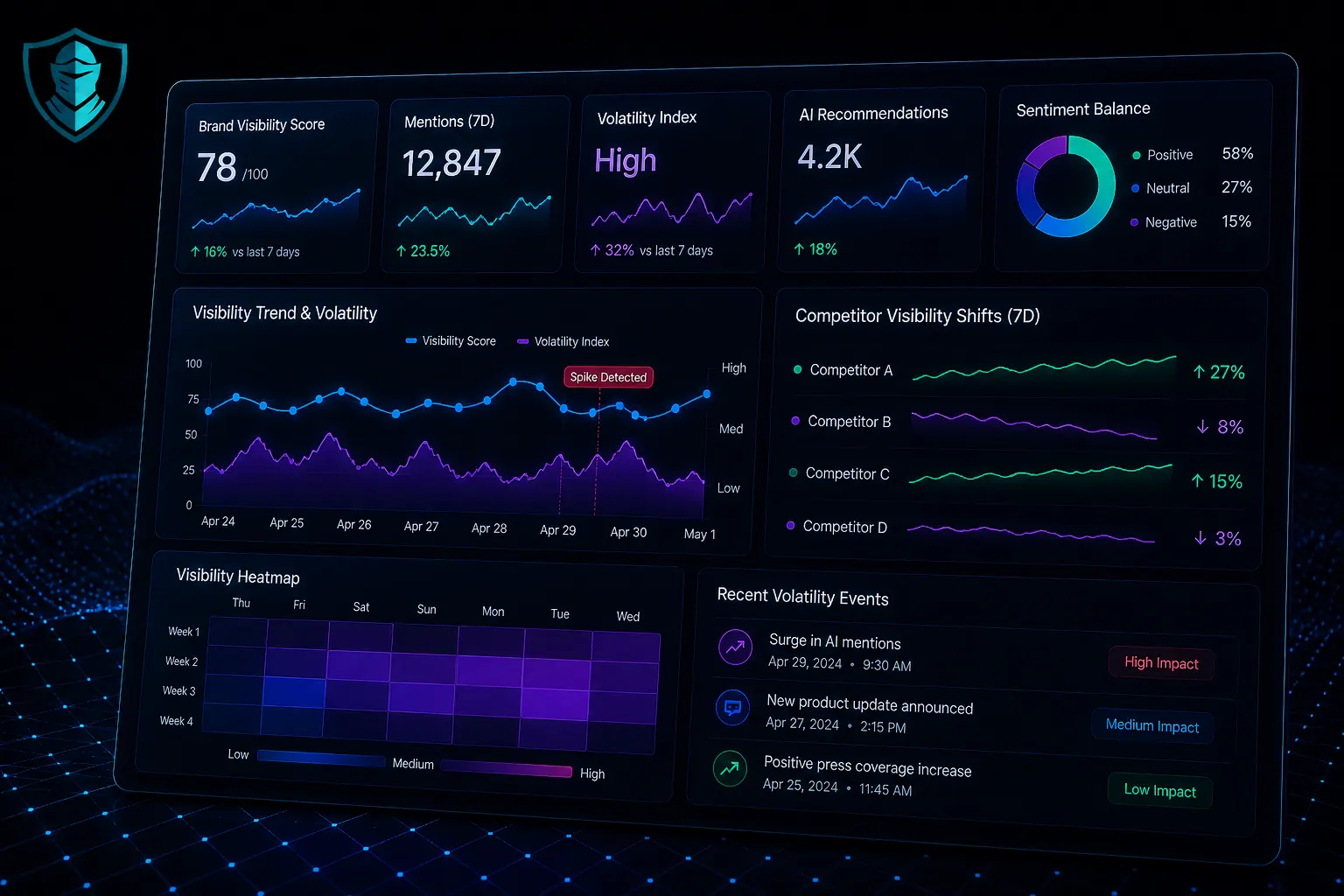
Model volatility tracking for fast-moving prompts
See how recommendation share shifts during trend spikes and identify which prompt clusters need immediate reclaim actions.
AI Monitoring
Monitor recurring Grok prompts to see when your brand appears, how it is positioned, which competitors replace it, and how recommendation sentiment changes over time.
Start Now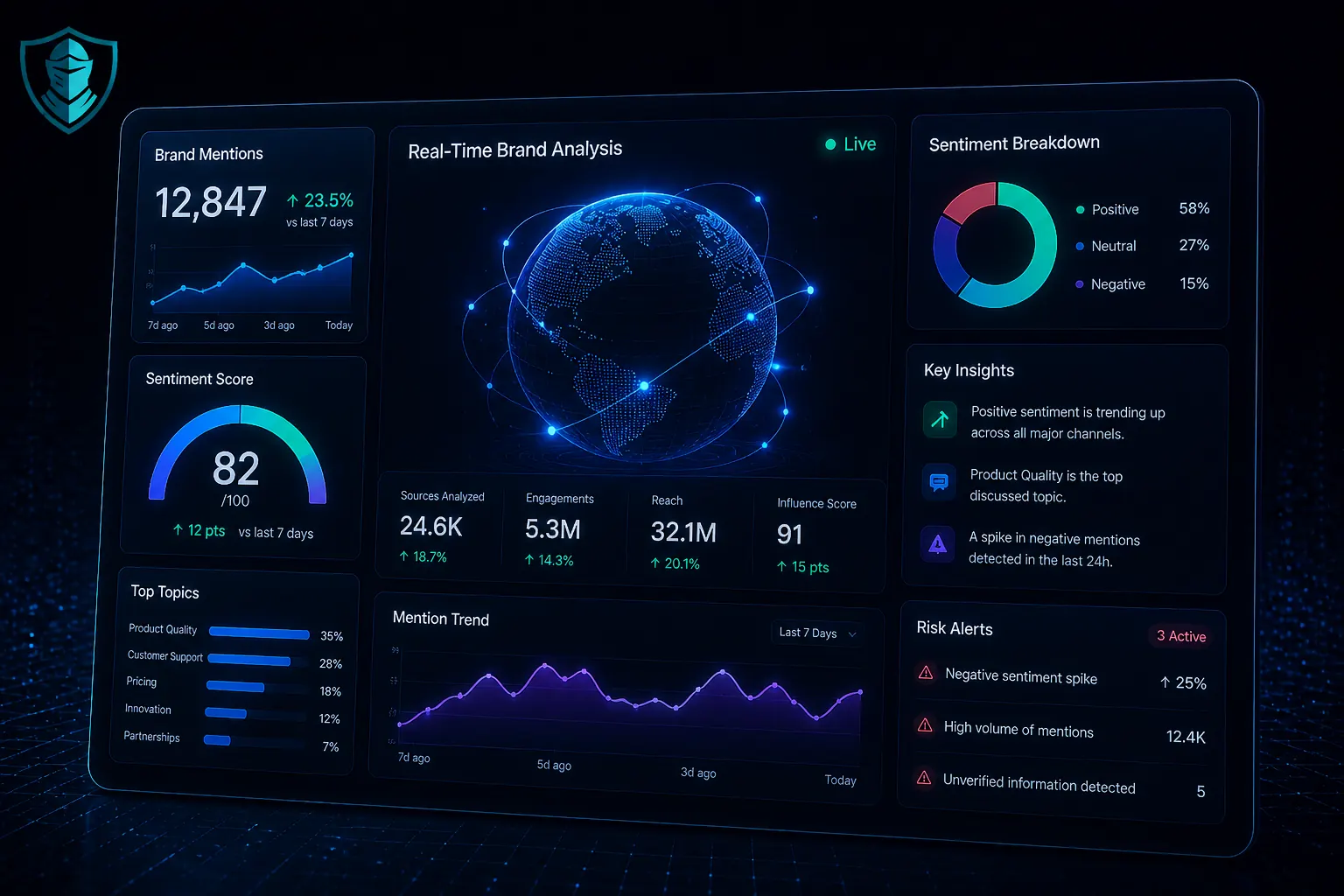
See how recommendation share shifts during trend spikes and identify which prompt clusters need immediate reclaim actions.
Track how rapidly Grok recommendation outcomes shift across trending prompts, breaking news, and social-driven category narratives.
Benchmark brand tone and recommendation preference against competitors in fast-moving Grok responses where social narratives change quickly.
Convert volatility signals into rapid-response content updates, comparison proof, and source corrections that stabilize recommendation visibility.
Because Grok reflects high-velocity social and web context, recommendation outcomes can swing quickly. Teams need tighter feedback loops than in slower-moving AI channels.
Grok conversations often involve technical and influential audiences. Recommendation wins here can shape broader market framing beyond one platform.
Track non-branded and comparison prompts continuously to establish your Grok recommendation baseline and identify high-value volatility zones.
Map where trend shifts, weak source signals, or competitor bursts suppress your recommendation share and citation quality.
Deploy targeted updates, then verify whether recommendation rank and sentiment stabilize across repeated prompt sets.
Trend acceleration can re-rank recommendations quickly. We surface movement early so teams can respond before narrative loss compounds.
Humor and sarcasm can hide sentiment risk. We separate novelty tone from genuine reputation direction.
Competitors can capture prompts during trend spikes. We map hijacked intents and prioritize reclaim actions by business impact.
Outdated facts age fast in real-time contexts. We monitor when your source freshness falls behind competitor narratives.
Grok visibility is more useful when every mention is tied to a prompt, competitor set, position, and point in time. That context distinguishes a meaningful recommendation from a passing reference.
Track how often Grok includes your brand on category, comparison, product, and buyer-fit prompts, then separate first-choice recommendations from secondary mentions.
Identify which competitors appear when your brand is absent and the reasons Grok gives for preferring them. Repeated patterns reveal the content or positioning gap worth addressing.
Compare answer tone and brand framing across recurring runs. This makes it easier to distinguish a temporary response variation from a sustained change in how Grok positions the category.
Validate product, pricing, audience, feature, and company claims in context. Flag inaccurate answers before they become part of a repeated buyer narrative.
Pair strategic analysis with always-on Grok monitoring and alerting.
Compare citation-heavy answer engine behavior with Grok volatility patterns.
Balance real-time volatility analysis with enterprise reasoning workflows.
Benchmark Grok outcomes against Google AI recommendation behavior.
Measure volatility, detect competitor hijacks, and ship recommendation recovery updates on fast timelines.
Track model-specific prompt outcomes in real-time recommendation scenarios.
Find where competitors gain Grok preference and reclaim with targeted updates.
Separate tone novelty from true sentiment movement affecting conversion trust.
Generate rapid response content for trend-linked recommendation losses.
Add deeper provider-specific monitoring for high-velocity narrative protection.
Monitor Grok-adjacent product recommendation behavior in commerce prompts.
The questions below cover the practical concerns teams usually have before they operationalize AI visibility monitoring.
Run a stable set of branded, category, comparison, and buyer-intent prompts on a recurring schedule. Record whether Grok mentions your brand, its recommendation position, the competitors shown, sentiment, and factual accuracy.
It shows the prompt behind each result, whether your brand appeared or was omitted, how strongly Grok recommended it, which competitors appeared, and how those outcomes changed between runs.
Yes. AI answers can vary as prompts, available context, and model behavior change. Recurring runs using the same prompt set provide a more reliable view than a single manual conversation.
No. A mention is an influence signal, not guaranteed traffic or revenue. The useful measurement is whether your brand consistently appears in relevant buying conversations with accurate, favorable positioning.
Use volatility tracking, competitor diagnostics, and high-velocity content recovery to protect and expand your Grok visibility footprint.
Start 3-day trial