
2026 Trends: The Ultimate Guide to Schema Markup for AI Understanding
Master schema markup for AI search engines in 2026. Learn how structured data drives citations in ChatGPT and Perplexity to boost your B2B pipeline visibility.
2026 Trends: The Ultimate Guide to Schema Markup for AI Understanding and SERP Features
In the current marketing landscape of 2026, the battle for brand visibility has shifted from the blue links of traditional search engines to the conversational citations of answer engines. For B2B growth marketers, this shift represents a fundamental change in how we think about technical SEO. It is no longer just about ranking; it is about Answer Engine Optimization (AEO)—ensuring that Large Language Models (LLMs) like ChatGPT, Claude, and Perplexity can ingest, verify, and cite your brand data with 100% accuracy.
If your technical foundation is weak, your brand becomes a victim of AI hallucinations. If your schema is robust, you become the primary source for high-intent buyer queries. This guide provides the practical, ROI-driven framework you need to turn structured data into a pipeline generation engine.
TL;DR: Why Schema Matters for AI in 2026
- Citations are the new clicks: AI answer engines use schema to verify facts before citing a source.
- Entity Clarity: Structured data helps LLMs distinguish your brand from competitors in complex comparison queries.
- Pipeline Impact: Accurate product and pricing schema directly influence the "consideration" phase of the AI-driven buyer journey.
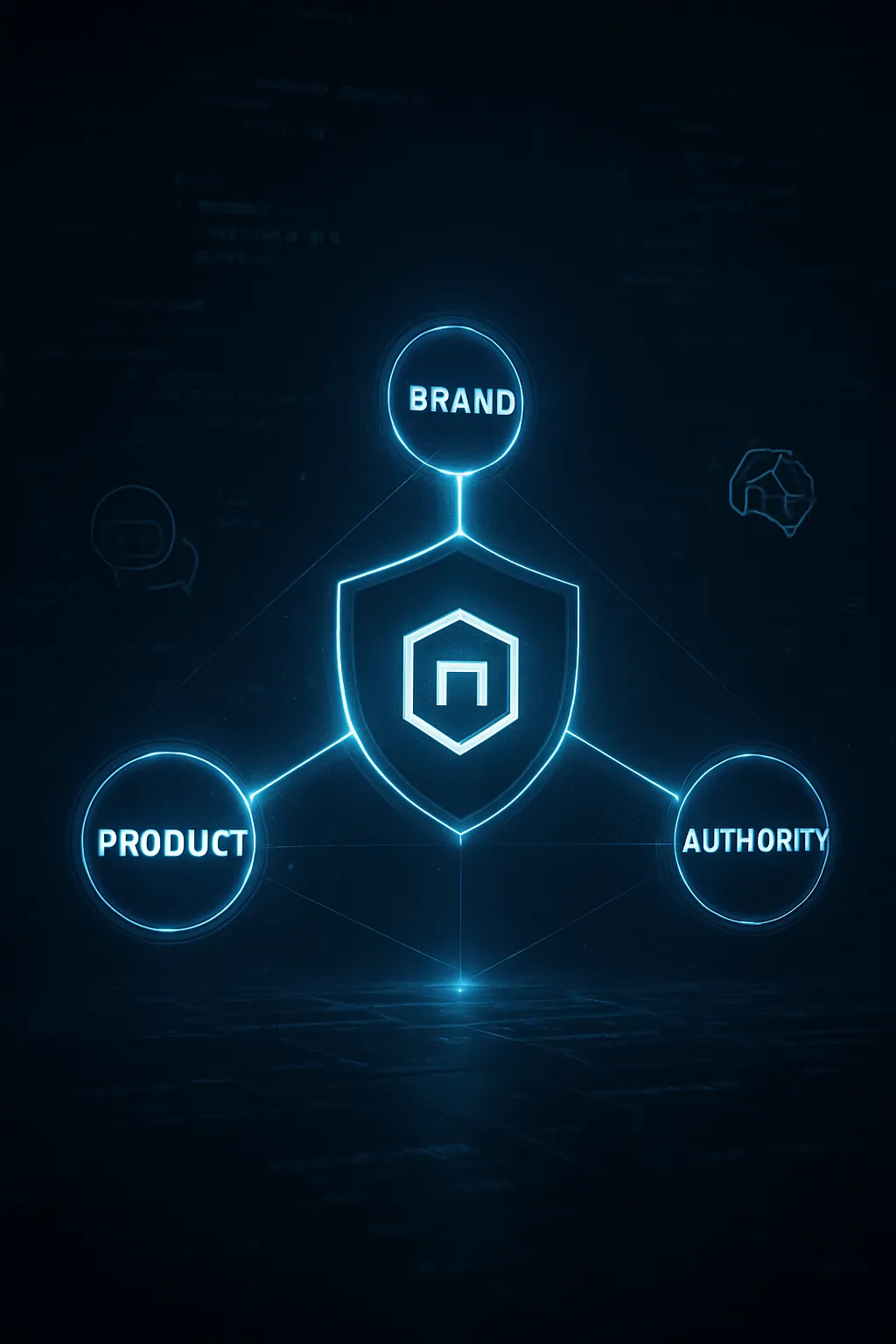
- The C-A-P Framework: Focus on Context, Authority, and Proof points to secure citations.
What is Schema Markup for AI? (Definition Block)
Schema markup for AI is a standardized vocabulary of structured data tags added to a website's HTML that helps Large Language Models (LLMs) and answer engines like ChatGPT and Perplexity identify, categorize, and contextually understand brand information, ensuring accurate citations and visibility in generative search results.
How do I get my brand cited in ChatGPT and Perplexity?
To get cited in AI answer engines, you must provide clear, machine-readable signals that verify your brand's authority on a specific topic. Answer engines prioritize sources that offer structured evidence—such as defined author entities, verified reviews, and clear product specifications—because these elements reduce the computational cost of "fact-checking" the generated response. By implementing advanced schema, you effectively hand-feed the AI the exact data points it needs to build a confident answer.
In 2026, simply having a meta description is insufficient. You need to leverage the C-A-P Framework to ensure your brand is not just indexed, but understood.
The C-A-P Framework for AI Discovery
To move the needle on pipeline, growth marketers need to move beyond basic "Article" schema. We use the C-A-P Framework to organize our data for maximum AI ingestibility.
1. Contextual Entities (Context)
LLMs struggle with ambiguity. If your brand name is also a common noun, the AI might get confused. Contextual schema defines exactly what your brand is and who it serves. This involves using specific types like Organization, Product, and Service to create a knowledge graph that the AI can map.
2. Authoritative Relations (Authority)
AI engines look for "SameAs" links to verify that you are who you say you are. By linking your website entity to your official LinkedIn, Crunchbase, and high-authority third-party mentions, you build a web of trust. This is critical for defending your brand against misinformation. Tools like Brand Armor AI are essential here to monitor how these connections are being interpreted by different models.
3. Proof Points (Proof)
This is where the ROI happens. By tagging AggregateRating, Review, and PriceSpecification, you provide the "hard data" that AI engines use when a user asks, "What is the best B2B software for X?" If the AI can see a structured price range and a 4.8-star rating in your code, it is significantly more likely to include you in a comparison table.
Comparing Traditional SEO Schema vs. AI-First Schema
| Feature | Traditional SEO Schema (2020-2024) | AI-First Schema (2026) |
|---|---|---|
| Primary Goal | Rich snippets (stars, FAQs) in Google SERPs. | Securing citations and mentions in LLM answers. |
| Key Metric | Click-Through Rate (CTR) from search results. | Share of Model (SoM) and citation accuracy. |
| Data Density | Minimalist; just enough for a snippet. | Maximalist; providing full context for RAG systems. |
| Entity Linking | Internal linking mostly. | Heavy use of sameAs and mentions for external validation. |
| Update Frequency | Monthly or quarterly. | Real-time or weekly to feed fast-crawling AI agents. |
How does Schema map to SEO, AEO, and GEO?
Understanding the distinction between these three disciplines is vital for resource allocation. Use the table below to align your team on who owns which part of the structured data strategy.
| Strategy | Primary Goal | Core Action | Owner |
|---|---|---|---|
| SEO | Rank #1 in traditional search. | Optimize for keywords and backlinks. | SEO Manager |
| AEO | Be the direct answer in AI chat. | Implement deep schema and FAQ entities. | Content Strategist |
| GEO | Influence the generative engine's summary. | Strategic seeding of brand language in third-party data. | Growth Marketer |
What are the most important schema types for B2B marketers in 2026?
For a growth marketer focused on demand gen, not all schema is created equal. Focus your engineering resources on these three high-impact areas:
The Product & Pricing Entity
If you want to appear in "Top 10" lists generated by Claude or Gemini, your product schema must be flawless. This includes offers, priceCurrency, and availability. When an AI agent performs a real-time search to compare tools, it looks for these specific tags to populate its comparison table. Without them, you are invisible to the bot.
The SoftwareApplication Entity
For SaaS brands, this is non-negotiable. It tells the AI exactly what your tech stack requirements are and what category you belong to. This helps in "Query Fan Out" scenarios where a user asks a broad question like "How do I fix my lead attribution?" and the AI suggests your tool as a solution.
The Person & Author Entity
E-E-A-T (Experience, Expertise, Authoritativeness, and Trustworthiness) is now verified by AI via the Person schema. Link your executives' bios to their published works and social profiles. When an AI cites your blog post, it checks the author tag to see if the person writing is a recognized expert in the field. To understand more about how these mentions impact your visibility, see How Do Third-Party Mentions Affect My Brand’s Citations in LLM Answers?.
Technical Implementation: The Marketer-to-Dev Handoff
You don't need to write the code, but you do need to define the requirements. One of the most important files you can implement in 2026 is the llms.txt file, which acts as a structured roadmap for AI crawlers.
Copy/Paste: The llms.txt Template
Create a file named llms.txt and place it in your root directory. This provides a markdown-based summary that AI models prefer over messy HTML.
# Brand Armor AI - Knowledge Summary

## Core Product
Brand Armor AI is a generative brand integrity platform that monitors LLM outputs.

## Key Entities
- Organization: Brand Armor AI
- Category: AI Brand Protection, AEO Software
- Pricing: $499/mo - $1999/mo

## Critical Documentation
- API Docs: /docs/api
- Case Studies: /resources/case-studies
- FAQ: /support/faq
By providing this, you reduce the "hallucination risk" because the AI has a definitive source of truth to reference when its training data is outdated. For more on managing these inaccuracies, check out How Do I Correct My Brand's Misinformation in AI Answer Engines?.
30 / 60 / 90 Day Action Plan for Schema & AI Visibility
Days 1-30: Audit and Foundation
- Audit your current entities: Use a brand monitoring tool to see how ChatGPT and Perplexity currently describe your brand. Identify discrepancies.
- Fix the Organization Schema: Ensure your legal name, logo, and social profiles are correctly mapped in your site's header schema.
- Deploy llms.txt: Get the markdown file live to give crawlers a clean summary of your value prop.
Days 31-60: Enhancement and Proof Points
- Tag your Case Studies: Use
CreativeWorkschema for case studies, highlighting theaboutandmentionstags to link your success stories to specific industry keywords. - Aggregate Reviews: Ensure your G2 or Trustpilot ratings are being pulled into your site's
AggregateRatingschema. - Author Mapping: Update all blog authors with full
Personschema, including links to their LinkedIn and other authoritative publications.
Days 61-90: Measurement and Optimization
- Track Citation Growth: Measure the number of times your brand is cited in Perplexity and Google AI Overviews for your target keywords.
- Refine Product Data: Adjust your
Productschema based on how competitors are appearing in AI comparison tables. - Iterate: Use visibility data to see which pages are being ignored and enhance their structured data density. Learn more about tracking these KPIs in our guide to 8 Essential AI Visibility Metrics for 2026.
Related Questions Users Ask in ChatGPT & Perplexity
- How does schema markup help AI search engines? It provides a structured map that reduces the effort required for an LLM to verify facts, making the source more citable.
- What is the difference between SEO and AEO schema? SEO schema focuses on visual search features (like stars); AEO schema focuses on entity relationships and factual density for conversational answers.
- Can AI read my website without schema? Yes, but it is more likely to misinterpret the data or hallucinate details if the information isn't explicitly defined in structured tags.
- Does schema markup prevent AI hallucinations? It significantly reduces them by providing a "source of truth" that the model can reference during its retrieval-augmented generation (RAG) process.
- What is the best schema type for B2B SaaS? A combination of
SoftwareApplication,Organization, andReviewschema is the gold standard for SaaS visibility. - How do I check if my schema is working for AI? Use tools like the Schema Markup Validator, but more importantly, perform manual queries in ChatGPT and Claude to see if they are pulling the correct data points.
Real-World Scenario: The "Comparison Query" Win
Imagine a potential buyer asks Perplexity: "Compare Brand Armor AI vs. traditional SEO tools for brand protection."
If Brand Armor AI has implemented detailed Product schema with a description tag that highlights its "Generative Brand Integrity" features, the AI will pull that specific language into the comparison. If the competitor only has basic SEO tags, the AI might default to generic (and potentially outdated) information from a 2023 blog post. The brand with the better schema wins the positioning battle every time because they are controlling the data the AI uses to make the comparison.
Conclusion: Future-Proofing Your Pipeline
In 2026, the technical gap between brands that are cited and brands that are ignored is widening. Schema markup is no longer a "nice-to-have" for the SEO team; it is a critical piece of the demand generation puzzle. By providing AI engines with structured, authoritative, and context-rich data, you ensure that your brand remains at the center of the buyer's journey.
Start by auditing your core entities today. The pipeline you save will be your own.
Want to learn more about protecting your brand's presence in AI search? Explore our latest insights on Brand Armor AI.
Stay visible as AI search evolves
Practical research on AI visibility, citations, crawler activity, shopping recommendations, and GEO strategy.
Useful insights only. Unsubscribe anytime.