
Prompt-level shopping visibility
See what appears for category, comparison, problem, budget, and product-intent questions.
Brand Armor AI turns recurring shopping prompts into product, competitor, citation, and retailer intelligence your team can act on.
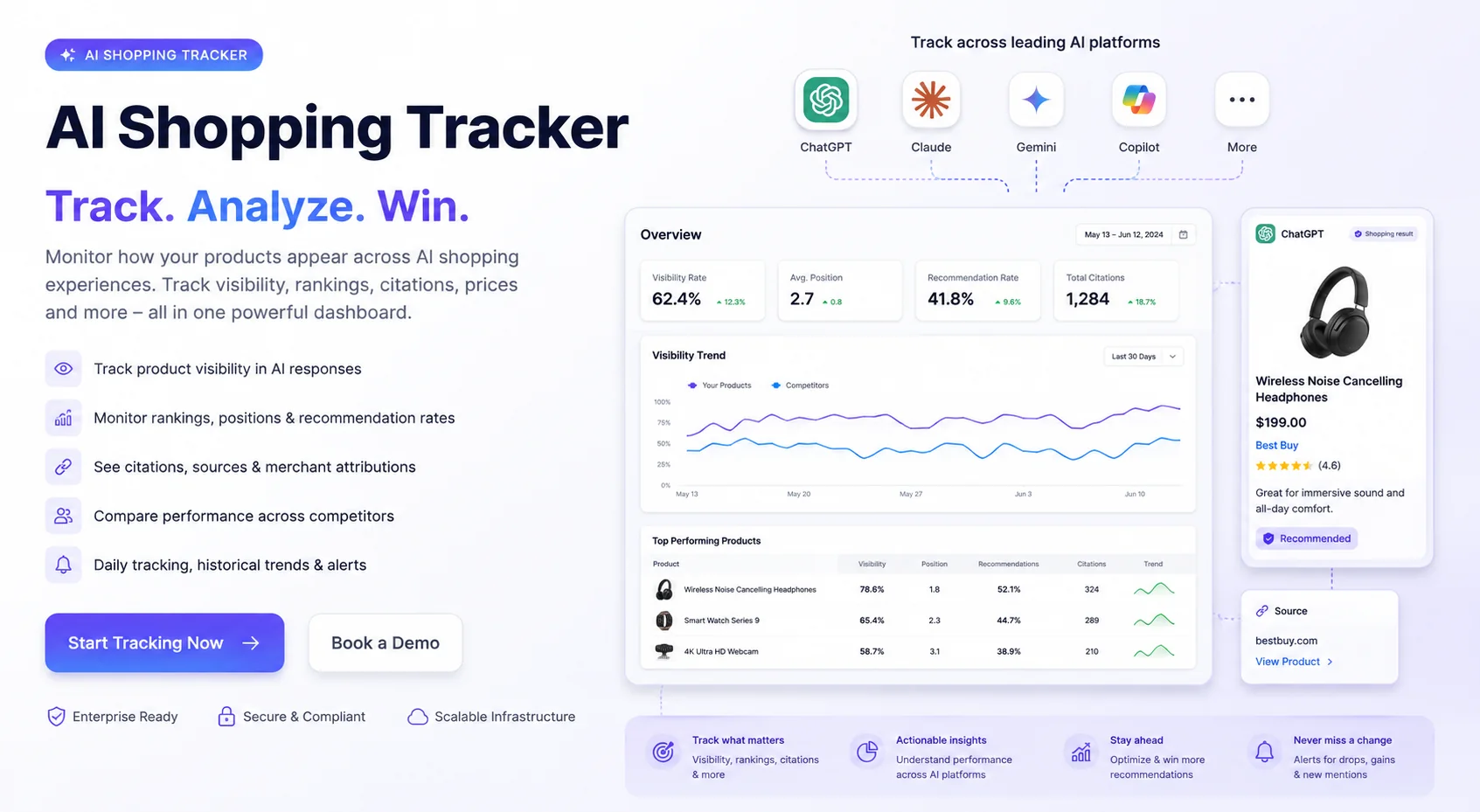
What you can monitor
Move from isolated questions to a recurring system that connects recommendation outcomes with the competitors and sources behind them.
See what appears for category, comparison, problem, budget, and product-intent questions.
Track whether your products are included and which competing options occupy the recommendation set.
Inspect the sources and seller context shaping how an answer presents the buying journey.
Compare recurring runs to distinguish persistent visibility from one-off answer variation.
Identify missing topics and product context when competitors answer the buyer need more clearly.
Separate relevant language and geographic prompt contexts for more useful decisions.
The operating loop
Run selected shopping prompts across supported AI platforms.
Find missing products, competitor wins, citations, and content gaps.
Strengthen the pages and supporting information relevant to the buyer need.
Compare future executions against the same prompt baseline.
Tracker buying guide
A useful system must preserve the commercial meaning of each answer. A product can be named but rejected, cited but not recommended, recommended without a merchant link, or linked through a retailer you do not control. Those are different outcomes and should not be merged into one visibility score.
Evaluate tracking software against the questions your team will need to answer after the first dashboard screenshot: which SKU won, for which need, in which market, against whom, and what evidence appears to support the result?
| Capability | Why it matters | Weak implementation |
|---|---|---|
| SKU-level identity | Separates individual products and variants. | Brand mentions only |
| Prompt segmentation | Preserves need, audience, budget, and market context. | One blended visibility total |
| Answer archive | Lets teams inspect the wording and rationale behind a metric. | Scores without evidence |
| Merchant routing | Shows whether the buyer is sent to you or another seller. | Counts every link equally |
| Competitor replacement | Reveals which product takes your place for the same need. | Generic competitor totals |
| Historical reruns | Separates durable movement from answer variation. | One-time scans |
Capture the prompt, answer, product state, competitors, sources, and merchant destinations.
Compare repeated losses and identify the missing fact, fit signal, evidence, or offer detail.
Route catalog issues, page changes, feed corrections, and supporting content to the right owner.
Rerun the same prompt cohort after meaningful changes and compare the new outcome.
No tracker can reveal private shopper conversations, a model’s hidden weighting, or guaranteed causality. Its job is to create a reproducible evidence trail from controlled prompts and public answer outputs.
Related intelligence
Common questions
It monitors shopping and buying-intent prompts to show which products, brands, retailers, competitors, and citations appear in AI answers over time.
Shopping Intelligence is designed to compare product and brand visibility against competitors appearing in the same shopping-related answers.
No. Brand Armor AI measures and helps teams improve visibility; it cannot control or guarantee the output of an independent AI platform.
Brand Armor AI supports localized prompt monitoring so teams can measure relevant market and language contexts rather than treating one answer as global.
Move from assumptions to recurring evidence
Monitor buyer prompts, product recommendations, competitors, citations, and shopping visibility across supported AI platforms.