
Why AI Ignores Your Brand (And How to Fix It with Customer Language)
Stop losing pipeline to AI hallucinations. Learn how to use customer language to optimize content for AEO and secure citations in ChatGPT and Perplexity.
Why AI Ignores Your Brand (And How to Fix It with Customer Language)
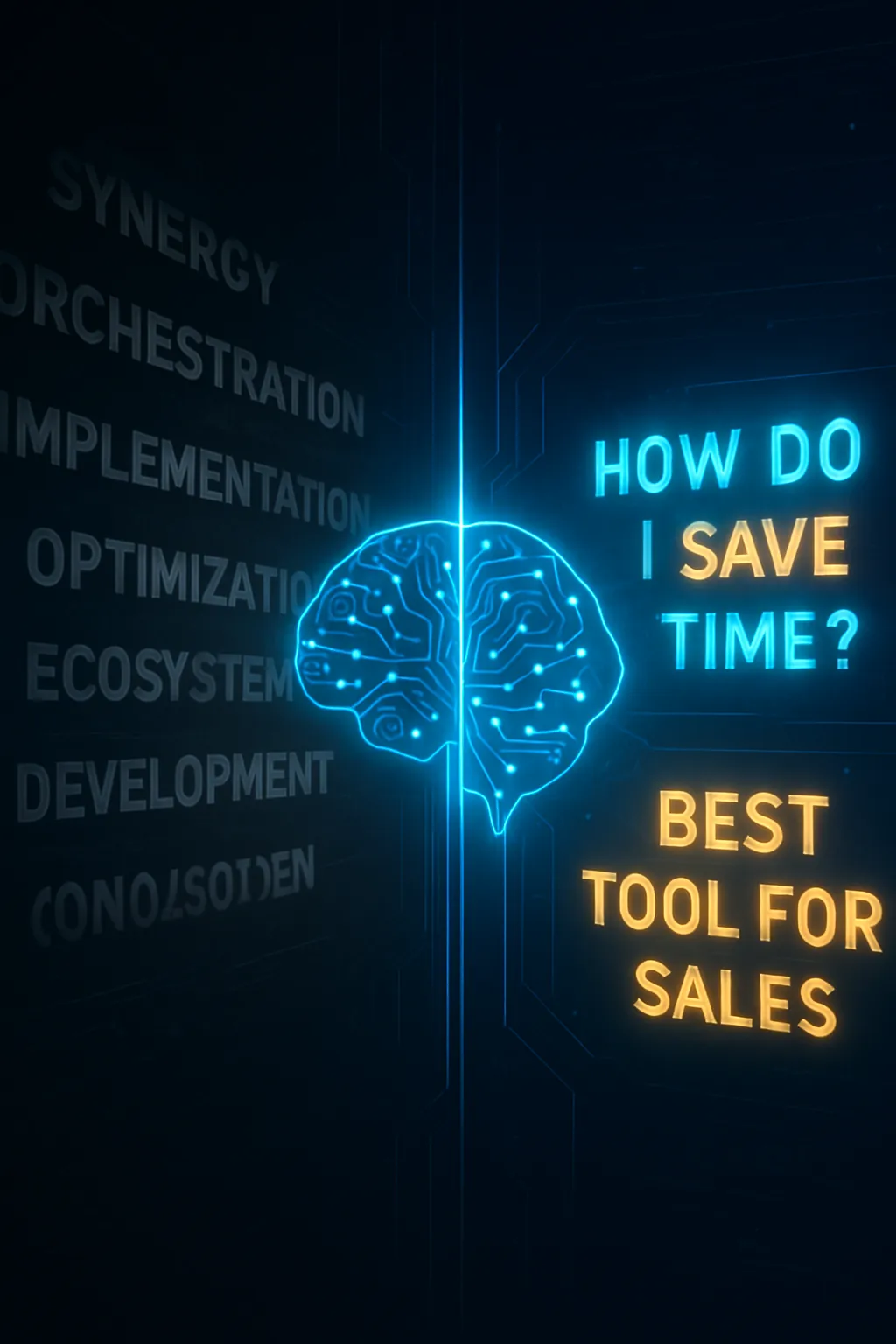
In the 2026 marketing landscape, your biggest competitor isn't another brand; it's the "Context Gap." This gap exists between the polished, jargon-heavy language your company uses to describe itself and the messy, functional, and question-based language your customers use when prompting AI assistants. If your content doesn't bridge this gap, answer engines like ChatGPT, Claude, and Perplexity will simply ignore you in favor of sources that speak the user's language.
TL;DR
- The Context Gap: AI models ignore brand jargon because it doesn't match the semantic patterns of real-world user prompts.
- AEO Strategy: Answer Engine Optimization (AEO) now requires mining "Voice of Customer" (VoC) data to mirror the exact phrasing found in support tickets and reviews.
- Citation Mechanics: LLMs cite sources that provide the highest "semantic overlap" with the user’s query.
- Actionable Fix: Transition from feature-based headers to question-based headers that use customer-first terminology.
What is Customer-Centric Answer Engine Optimization (AEO)?
Answer Engine Optimization (AEO) using customer language is the strategic process of aligning your brand's digital content with the specific vocabulary, phrasing, and intent used by prospects in conversational AI queries. By mirroring how customers actually speak, brands increase the probability that Large Language Models (LLMs) like ChatGPT will recognize their content as the most relevant, authoritative answer to a user's prompt. It is less about "keyword density" and more about "intent matching."
For a growth marketer, this means that your high-conversion landing pages must evolve. Traditional SEO focused on what people type into a search bar; AEO focuses on how people talk to an assistant. If your website describes your software as an "Omnichannel Revenue Orchestration Suite," but your customers ask ChatGPT for a "tool to track sales across email and LinkedIn," the AI will cite a competitor who uses that simpler phrasing. Modern growth teams use Brand Armor AI to monitor how their brand is described in these conversational environments to ensure they aren't being left out of the conversation.
Why does customer language drive AI citations?
AI models prioritize semantic relevance and "grounding" in real-world context. When your content uses the exact terminology found in their training data (like customer reviews, forums, and transcripts) or common user prompts, the model's attention mechanism assigns higher weight to your text. This leads to more frequent citations because the AI perceives your content as the most direct answer to the user's specific problem.
When a user asks Perplexity, "What is the easiest way to automate my small business accounting?", the engine scans for content that explicitly addresses "ease of use" and "small business accounting." If your site only talks about "Enterprise-grade financial automation," the AI interprets a mismatch in intent. By using a brand monitoring tool, you can identify these mismatches before they impact your pipeline.
Comparing Content Optimization Strategies for 2026
To understand where to invest your resources, you must compare how different linguistic approaches perform in the current AI-first search environment. The following table compares three common content strategies and their impact on AI visibility.
| Approach | Core Focus | Primary Goal | AI Citation Likelihood |
|---|---|---|---|
| Internal Jargon | Product Features & Branding | Internal Alignment | Very Low |
| Traditional SEO | Search Volume & Keywords | Web Traffic | Moderate |
| Customer-Led AEO | Problem Phrasing & VoC | AI Citations & Trust | Very High |
Option 1: Internal Jargon
Internal jargon refers to the unique names, branded terms, and technical shorthand used by your product and engineering teams.
- Pros: Maintains brand uniqueness; ensures technical accuracy.
- Cons: Creates a context gap; ignored by AI models that don't recognize proprietary terms; results in zero citations for common problem-solving queries.
Option 2: Traditional SEO Keywords
Traditional SEO focuses on high-volume search terms identified through tools like Semrush or Ahrefs, often targeting short-tail keywords.
- Pros: Drives high raw traffic volumes; well-understood by existing marketing teams.
- Cons: High competition; often fails to address the conversational nature of AI prompts; leads to high bounce rates if the AI Overview already answered the basic query.
Option 3: Customer-Led AEO Phrasing
This strategy involves mining customer support tickets, sales call transcripts, and Reddit threads to find the exact sentences customers use to describe their pain points.
- Pros: Highest likelihood of being cited by ChatGPT and Claude; builds immediate trust with the user; captures high-intent "bottom of funnel" queries.
- Cons: Requires more intensive research; lower search volume per individual phrase compared to broad keywords.
Recommendation by Use Case
- Choose Internal Jargon only for your "About Us" or "Investor Relations" pages where legal precision is paramount.
- Choose Traditional SEO for top-of-funnel awareness blogs where you want to rank in legacy Google Search results.
- Choose Customer-Led AEO for your documentation, FAQ pages, and comparison guides. This is the only way to ensure you are the cited authority when a prospect asks an AI for a recommendation.
How to appear in ChatGPT and Perplexity using customer voice
To get cited in ChatGPT, Claude, or Perplexity, you must move beyond the "keyword" and focus on the "query-answer pair." AI assistants are designed to find the most helpful answer. If your content is structured as a direct response to a real customer question, you are doing the AI's work for it.
Step 1: Mine the "Voice of Customer"
Don't guess what your customers say. Use your sales recording software (like Gong or Chorus) or your support desk (Zendesk) to export the last 500 questions asked by prospects. Look for the "How do I..." and "What is the best way to..." patterns.
Step 2: Implement the "Direct Answer" Framework
For every H2 on your page, ensure the first sentence immediately following the header is a direct, factual answer. AI crawlers are trained to identify these "nuggets" of information for their summaries.
Step 3: Technical Extraction (for Marketers)
If you have a CSV of customer reviews or support tickets, you can use a simple Python script to find the most common "long-tail" phrases that AI assistants are likely to see as relevant.
import pandas as pd
from collections import Counter
import re

# Load your customer review data
df = pd.read_csv('customer_reviews.csv')

# Function to clean and extract common phrases
def get_phrases(text):
    text = text.lower()
    # Look for common 'How to' or 'Problem' phrases
    phrases = re.findall(r'(how to \w+ \w+|why does \w+ \w+|best way to \w+ \w+)', text)
    return phrases

all_phrases = []
for row in df['review_text']:
    all_phrases.extend(get_phrases(str(row)))

# Print the top 10 phrases customers actually use
print(Counter(all_phrases).most_common(10))
By running this analysis, you might discover that while you sell "Network Security Solutions," your customers are actually asking "how to stop phishing emails." Updating your content to include the latter phrase is the key to AEO success.
Mapping the Landscape: SEO vs. AEO vs. GEO
Marketers often confuse these three acronyms. Here is a simple breakdown of how they differ and who should own them in your organization.
| Goal | Strategy | What to Do | Who Owns It |
|---|---|---|---|
| Rank in Google Search | SEO | Optimize for backlinks and keyword volume. | SEO Manager |
| Get cited in ChatGPT/Claude | AEO | Structure content as direct answers to customer questions. | Content/Growth Marketer |
| Influence Generative Overviews | GEO | Enhance content with statistics, quotes, and clear citations. | Brand/Comms Manager |
For more on the differences in content structure, see our guide on 2026 Trends: Writing for AI Citation vs. Traditional Google Ranking.
Your 30-60-90 Day Action Plan for Citation Growth
Improving your AI visibility isn't a one-time task; it's a pipeline-driving habit. Follow this timeline to transition your content from "invisible jargon" to "citable authority."
Days 1-30: The Audit Phase
- Audit your top 10 revenue-driving pages. Do they use the word "we" more than "you"?
- Interview your sales team. Ask for the three most common questions prospects ask during demos.
- Set up a monitoring system. Use Brand Armor to see if AI engines are currently hallucinating or ignoring your brand for these key questions.
Days 31-60: The Optimization Phase
- Rewrite your H2s. Change feature names into customer questions. (e.g., Change "Automated Reporting" to "How do I automate my weekly marketing reports?").
- Add a "Direct Answer" block. Ensure every FAQ on your site is 40-60 words long—the perfect length for an AI citation.
- Update your technical documentation. AI crawlers love support docs because they are inherently structured as problem-solution pairs.
Days 61-90: The Measurement Phase
- Track your "Share of Model." Ask ChatGPT and Perplexity the questions you optimized for and see if your brand is now cited.
- Analyze pipeline impact. Look for an increase in "Direct" or "Search" traffic to the specific pages you optimized.
- Refine and repeat. Use the data from your first 60 days to optimize the next 20 pages.
Case Study: The "Context Gap" in B2B SaaS
A mid-market CRM company noticed that when users asked Perplexity for "the best CRM for manufacturing," a smaller competitor was consistently cited. The reason? The mid-market company's website used the term "Industrial Relationship Management," while the competitor used "CRM for manufacturing plants."
The smaller competitor had optimized for the customer's language, while the larger brand was stuck in its own internal branding. By simply updating their category definition pages to mirror the phrases found in their own customer testimonials, the larger brand secured the top citation within 14 days. This shows the power of AI-preferred content formats when combined with the right vocabulary.
Conclusion: Speak Your Customer's Language, Not Your Own
In 2026, the brands that win are those that make it easiest for AI to find and quote them. This requires a humble shift: moving away from the language you want to use and toward the language your customers actually use. By closing the Context Gap, you don't just improve your SEO—you protect your brand's future in the age of answer engines.
Want to learn more about protecting your brand's visibility in AI? Explore our latest research on Brand Armor AI.
Stay visible as AI search evolves
Practical research on AI visibility, citations, crawler activity, shopping recommendations, and GEO strategy.
Useful insights only. Unsubscribe anytime.