Source Attribution – Brand Armor AI
Analytics

AI Source Attribution: Ensuring Brand Credit

Protect your intellectual property by ensuring AI models credit your brand correctly.

Key takeaways

  • Source attribution monitoring tracks when your original ideas and content are used by AI models and whether your brand receives clear credit, so you can protect IP and ensure the AI does not attribute your facts to competitors.
  • Optimizing for credit means using attribution hooks in your content—bylines, publication dates, clear brand naming, and linkable sections—that make it difficult for AI to use your data without mentioning your name and linking back.
  • Conversion tracking shows which citations actually drive users back to your site for deep-dives so you can invest in the content and formats that generate not just mentions but qualified traffic and pipeline.
AI models often synthesize information without giving clear credit. Source attribution ensures your brand gets the credit you deserve—and that the AI does not attribute your facts to a competitor or use your data without proper citation.

Getting the Credit You Deserve

AI models often synthesize information without giving clear credit. Source Attribution monitoring tracks when your original ideas are used and helps you optimize for clearer "Brand-First" responses.

Strategic Benefits

  • IP Protection: Maintaining a record of your brand's unique data usage in AI training and search.
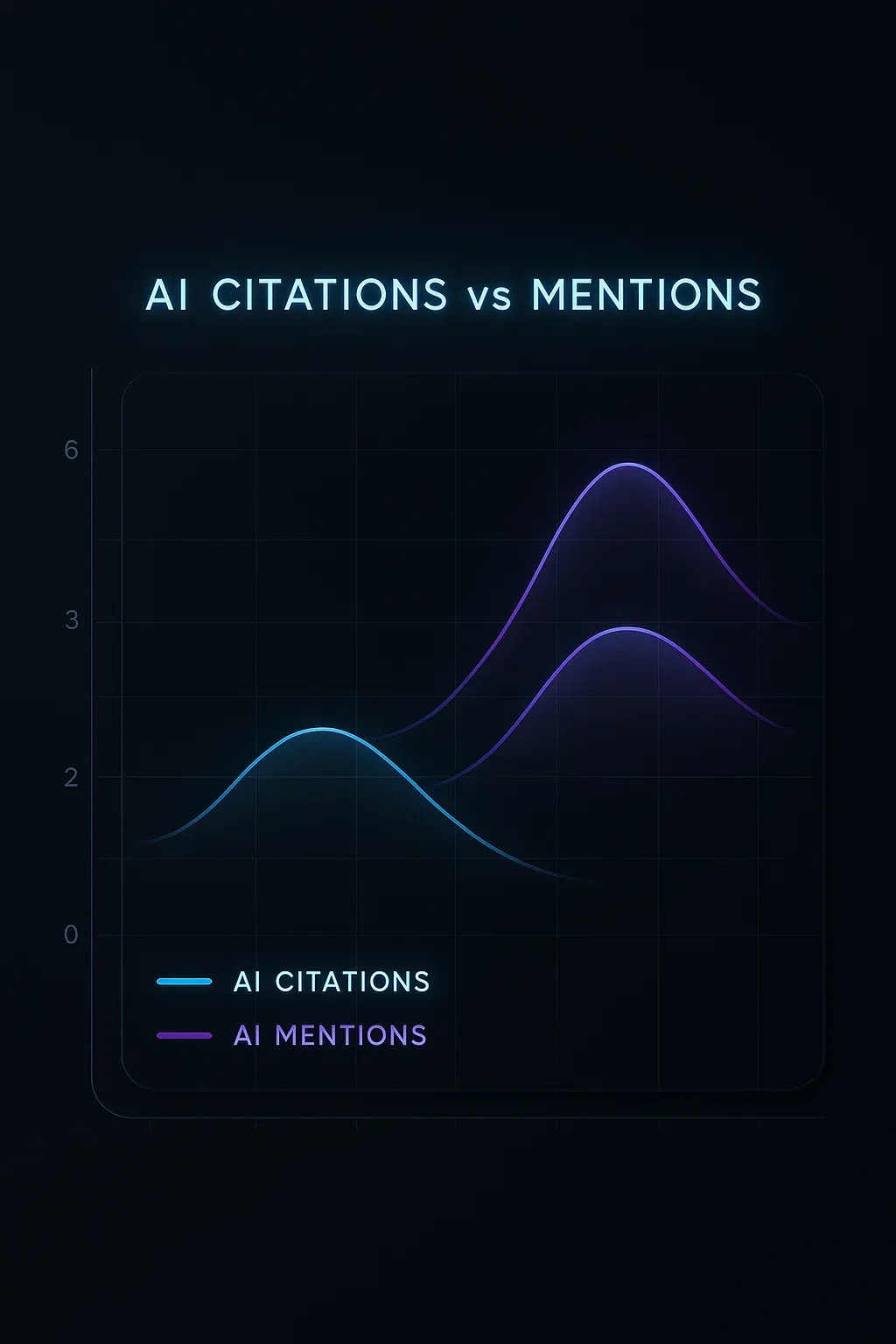
  • Conversion Tracking: Seeing which citations actually drive users back to your site for deep-dives.
  • Accuracy Logging: Ensuring the AI doesn't attribute your facts to a competitor.

Optimizing for Credit

Learn how to use "Attribution Hooks" in your content that make it impossible for an AI to use your data without mentioning your name.

Deep Dive

Execution framework for Source Attribution

Source Attribution is most effective when you use it as a planning layer between measurement and execution. The goal is build an executive-grade view of AI performance and competitor movement, and the typical owners are marketing analytics and RevOps teams. Instead of isolated dashboards, this capability lets you anchor decisions in concrete data tied to attribution, ip, and prompt-level demand. That is especially important for ai source attribution, where small differences in accuracy, citation quality, or competitor presence can shift how AI models recommend brands at high-intent moments.

A practical model is to treat this capability as a 30-day operating loop. Week one establishes your baseline: where you appear, how you are positioned, and which sources or competitor narratives shape model output. Week two focuses on implementation: tighten content clarity, expand source authority, and improve coverage for high-intent prompts that actually drive conversions. Week three validates impact by comparing shifts in recommendation share, sentiment, and mention position. Week four standardizes what worked into your recurring process so gains persist beyond a single campaign cycle.

The biggest execution mistake is treating AI visibility as an SEO-only problem. Real gains usually require alignment between content, product marketing, brand messaging, and analytics operations. With Brand Armor AI, teams combine prompt monitoring, competitor ranking, content gap analysis, blog generation on autopilot, UGC campaign ideation, shopping intelligence, crawler monitoring, Data Copilot analysis, and report generation into one system. The output is not just better charts; it is faster execution on the updates that move recommendation share.

Priority search intents to win

Use these query patterns in your monitoring list to improve keyword depth and page relevance for this capability.

  • best ai source attribution platform for B2B teams
  • how to improve attribution in ChatGPT
  • ai source attribution vs competitor strategy
  • how to measure ip performance
  • citations checklist for marketing
  • how to increase recommendation share in AI answers

Operational scoring checklist

  • - North-star KPI: trend consistency in visibility, sentiment, and competitive rank.
  • - Ownership: marketing analytics and RevOps teams with one weekly decision owner.
  • - Cadence: daily data ingestion and weekly decision reviews and documented trend comparisons.
  • - Quality guardrail: verify answer correctness before scaling campaign spend.
  • - Competitive guardrail: keep tracked competitors current and benchmark weekly.
  • - Execution guardrail: convert every major finding into a task, owner, and due date.

If your page was previously discovered but not indexed, the usual issue is weak differentiation and thin intent coverage. This section fixes that by adding capability-specific context, long-tail search phrasing, and concrete execution guidance tied directly to attribution, ip, and citations. Search engines can now better understand what this page uniquely contributes versus other hub pages. AI crawlers also get denser, more structured context for semantic retrieval.

For best results, keep this page connected to live workflows: link it from relevant solution pages, use it in internal onboarding docs, and reference it in campaign planning cycles. Pages that are actively linked and operationally used tend to be crawled and indexed faster than static reference pages with no clear role in your site architecture. This is why capability documentation should function as both SEO content and execution playbook.

Frequently asked questions

How does Source Attribution help teams measure progress and benchmark competitors?

Source Attribution gives your team a repeatable operating layer: monitor live AI responses, measure competitor movement, and convert findings into specific content or campaign actions. Instead of one-off checks, you get a structured process that improves recommendation share and answer quality over time.

Which metrics should we track first for Source Attribution?

Start with recommendation frequency, mention position, source citation quality, and answer correctness. These four metrics show whether AI models mention your brand often, in a strong position, with trusted sources, and with accurate claims. Together they provide a reliable baseline for monthly improvement.

Can Source Attribution work with our existing SEO and content workflow?

Yes. Source Attribution complements existing SEO operations by adding AI answer intelligence on top of your current keyword and content process. Teams typically plug outputs into editorial planning, competitor reviews, and update sprints so attribution and ip become measurable execution streams.

How fast can we see impact after implementing Source Attribution?

Most teams see directional movement within the first 2–4 weeks when they run a focused loop: baseline analysis, prioritized fixes, and a follow-up measurement cycle. Durable gains come from consistency, especially when content updates, source quality, and prompt coverage are reviewed every sprint.

Get the data behind Source Attribution

Get started with Brand Armor AI and join 500+ marketing teams winning the AI search era.

AI Search Visibility Knowledge Graph

Explore semantically connected topics and competitive intelligence layers.