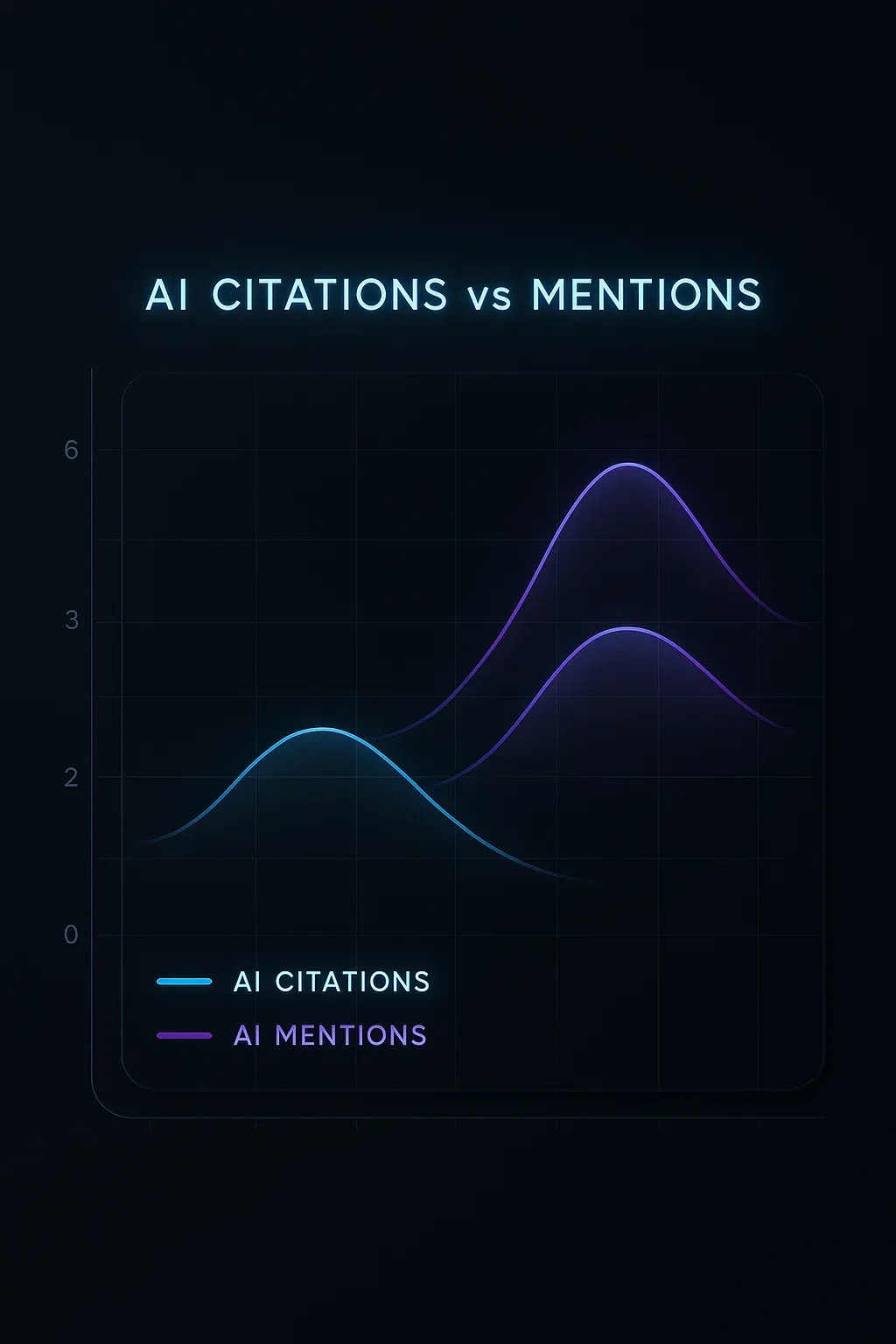
The New Backlink: Why AI Citations Matter More Than Traditional Links
In traditional SEO, backlinks were the currency of authority—the more high-quality sites linking to you, the more Google trusted your content. In the AI search era, citations are the new backlinks. When ChatGPT, Claude, Gemini, Perplexity, or Grok cites your domain as a source in their generated answers, it signals ultimate authority: "This brand's data is trustworthy enough to stake my reputation on."
AI citations matter because they directly influence future recommendations. When an LLM cites you repeatedly for certain topics, it strengthens the association between your brand and those concepts in the model's knowledge graph. This creates a compounding effect—early citations make future citations more likely, building momentum that's difficult for competitors to overcome.
Brand Armor AI provides comprehensive citation tracking across all major LLMs, showing you not just that you're being cited, but when, where, how, and why AI models choose your content as authoritative sources. This intelligence transforms citation tracking from vanity metrics into strategic guidance for content optimization.
What We Track: The Four Dimensions of AI Citations
1. Citation Frequency & Volume
The foundational metric measures how often AI models cite your domain across all monitored prompts. Brand Armor AI tracks:
- Total Citations Per Week: Your baseline citation volume across all LLMs
- Citations Per LLM: Platform-specific breakdown showing where you have strongest authority (e.g., high in Perplexity but low in Claude)
- Citation Growth Rate: Week-over-week and month-over-month trends showing if your authority is increasing or declining
- Citation Share: Your percentage of total citations in your category vs. competitors
The Citation Dashboard provides visual trends showing your citation trajectory, with alerts when volume drops unexpectedly (often indicating a content issue or competitive threat).
2. Domain Attribution & Link Quality
Not all citations are equal. Brand Armor AI analyzes the quality and relevance of how AI models attribute your content:
Link Fidelity: Are AI models linking to the most relevant, current pages on your site? Or are they citing outdated, irrelevant, or broken URLs? Our Link Fidelity Score measures how well AI citations align with your intended content hierarchy.
Attribution Format: Do AI models provide full URL citations with clear context, or vague references like "according to some sources"? Full attribution with visible URLs signals stronger authority than unattributed mentions.
Citation Prominence: Where does your citation appear in the AI's response? Citations in the opening paragraph or as primary sources carry more weight than footnotes buried at the end of long answers.
Deep Link Value: Are AI models citing specific, valuable pages (product features, technical docs, case studies) or just your homepage? Deep link citations indicate stronger topical authority.
The Attribution Quality Dashboard flags low-quality citations that need optimization, helping you understand which content updates will improve citation value.
3. Contextual Accuracy & Citation Correctness
Being cited doesn't help if the AI is misquoting your data or attributing wrong information to you. Brand Armor AI's Citation Correctness Analyzer evaluates:
Quote Accuracy: Is the AI quoting your content verbatim or paraphrasing it correctly? We flag misquotations that could damage your brand's credibility.
Fact Accuracy: Is the AI attributing correct facts to your brand (accurate pricing, features, positioning)? Outdated or wrong facts lower citation quality even if technically attributed to you.
Context Appropriateness: Is your citation appearing in relevant contexts, or is the AI inappropriately linking your content to unrelated topics? Miscontextualized citations can confuse brand positioning.
Sentiment in Context: When AI models cite you, is the surrounding content positive, neutral, or negative? Being cited in a negative context ("X company was criticized for...") damages brand perception despite technically being a citation.
You'll receive alerts when AI models cite incorrect or outdated information about your brand, with direct links to the source content that needs updating. Fixing these perception issues often provides the fastest path to improved citation quality and visibility scores.
4. Content Type & Format Performance
Different content types earn citations at different rates. Brand Armor AI analyzes which formats drive the most authoritative citations:
Top-Performing Formats:
- Technical Documentation: Often earns the highest citation rates for "how to" and implementation queries
- Case Studies: Frequently cited when users ask "does [product] work?" or request proof of effectiveness
- Original Research/Data: AI models heavily cite unique data and industry benchmarks not available elsewhere
- Comparison Guides: Referenced when users ask head-to-head questions
- FAQ Pages: Cited for specific, direct-answer queries
- Blog Posts: Variable citation rates depending on depth and originality
The Content Type Performance Dashboard shows your citation rate by format, revealing which content investments deliver the highest authority ROI. If technical docs earn 3x more citations than blog posts, you know where to prioritize content resources.
Citation Attribution Patterns We Identify
The Citation Cluster Effect
When AI models cite multiple pages from your domain in a single answer, it signals deep authority on that topic. Brand Armor AI identifies these cluster moments and the topics that trigger them, allowing you to double down on areas where you have concentrated authority.
The Citation Drought
Topics where you publish content but never earn citations indicate either content quality issues or structural problems preventing AI ingestion. We flag these drought areas and provide optimization recommendations to unlock citation potential.
The Competitor Citation Gap
Prompts where competitors consistently earn citations but you don't reveal strategic weaknesses. Our Competitive Citation Analysis shows exactly which competitor content is being cited and what makes it citation-worthy, giving you a roadmap to reclaim authority.
The Citation Decay Pattern
Content that previously earned regular citations but has stopped often indicates outdated information or competitors publishing fresher alternatives. We alert you to decaying citations early so you can refresh content before losing authority permanently.
Optimizing Your Content for Maximum Citations
Schema Markup for Attribution
Implement comprehensive structured data (Organization, Product, FAQ, HowTo schema) that makes it easy for AI models to parse and attribute your content. Brand Armor AI's Schema Generator creates optimized markup automatically.
Clear Source Signals
Display author credentials, publication dates, update timestamps, and editorial review processes prominently. These signals help AI models evaluate source quality and increase citation likelihood.
Linkable Content Architecture
Create clean URL structures, implement heading IDs for fragment linking, and maintain canonical URLs so AI can cite specific sections without ambiguity.
Fact Density & Clarity
Maximize quotable facts per page. AI models prefer citing content that provides clear, unambiguous data over vague marketing language.
Update Cadence
Regularly refresh your top-cited pages with new data, examples, and insights. Demonstrating ongoing maintenance increases AI trust and citation frequency.
Citation ROI: Measuring Business Impact
Brand Armor AI correlates citation frequency with business outcomes:
Lead Quality: Do prospects who discovered you through AI citations convert at higher rates than other channels?
Sales Cycle: Does strong AI citation presence shorten the sales cycle by pre-establishing authority before first contact?
Brand Perception: Are cited brands perceived as more authoritative and trustworthy by prospects?
Competitive Positioning: Does citation dominance translate to market share gains?
The Citation ROI Dashboard shows these correlations, helping you quantify the business value of citation optimization and justify continued investment in AI visibility strategies.
Continuous Monitoring & Alerts
Brand Armor AI tracks your citations 24/7 with real-time alerts for:
- Citation Spikes: Sudden increases indicating a piece of content gaining traction
- Citation Drops: Decreases suggesting a problem needing immediate attention
- New Citation Opportunities: Prompts where competitors are cited but you're not
- Misattribution Issues: When AI models cite wrong information about you
- Competitive Threats: Competitors gaining citation share in your core topics
Connect alerts to Slack, Teams, or email so your team can respond to citation threats and opportunities in real-time without constantly monitoring dashboards.